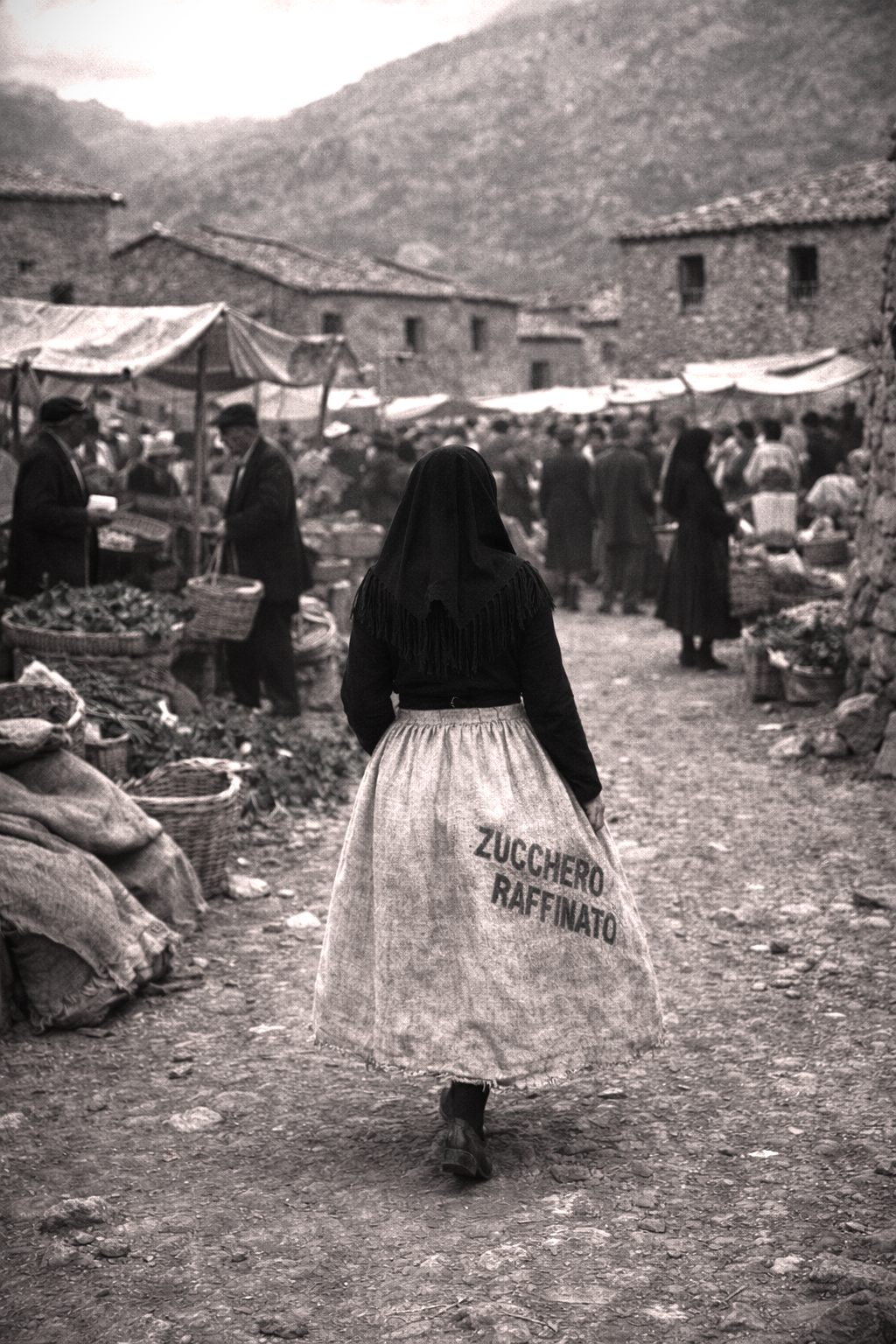


“Non si bi connoskés prusu” – You don’t recognize it anymore”, my grandfather tells me in Sardinian as we walk down to the river in Lodè, Sardinia. He had not been there for many years.
Today, reaching it is a real challenge: the path is difficult, overgrown with brambles and thorny bushes, and by the time you get there your arms and shins are covered in scratches.
But it was not always like this.
Once, the country roads in Lodè were busy and the paths were clear. It was almost like a village on the edge of the village, because nearly everyone went there: to work the land, feed the animals, check on the beehives and look after the bees.
But also to wash clothes or simply, as people said, “pro bagnare” – to go for a swim.
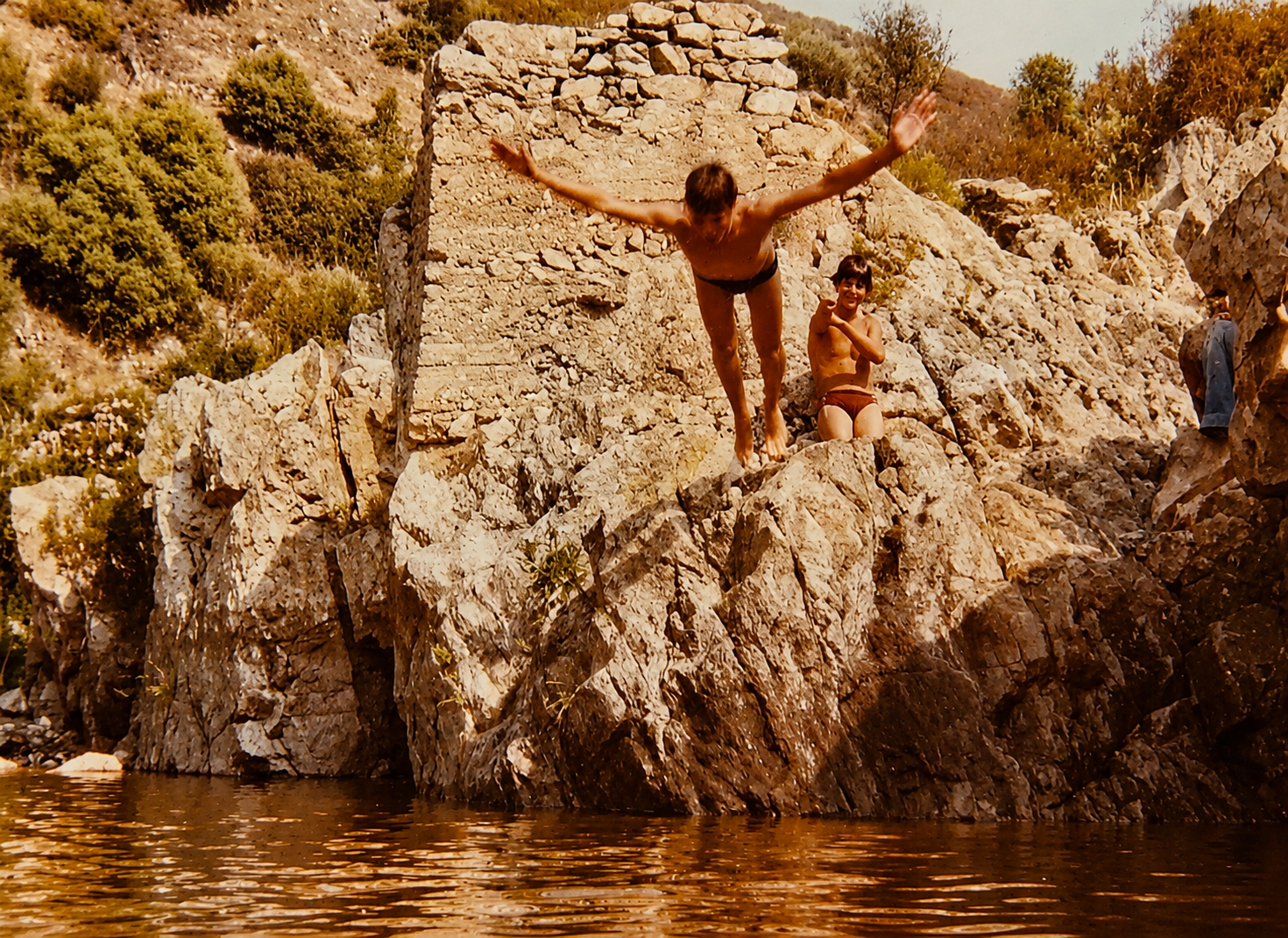
“Istaiamos venas a 15-20 pizzinnos inintro’e s’abba… app’ael-juttu 12 o 13 annos – There were often fifteen or twenty of us boys in the water at the same time… I must have been twelve or thirteen.”
My grandfather laughs as he tells the story, as though he suddenly remembers himself as a wild child, forgotten by the adults around him. In the 1940s he too spent most of his days near Ponte Ruttu, where he took a few goats out to graze.
While the animals fed peacefully, the river became a meeting place for the local children.
Perhaps because of the stories, perhaps because of the unusual names given to its places (Ponte Ruttu, Orcherì, S’Istrìsina, Gallé), the river of Lodè has always retained something mysterious.
Many true stories were born there, stories of people and animals swept away by the relentless current. In the village, for example, people still speak of a man named Cosimo Ghisu who drowned in 1946 while trying to cross the river with his horse. He left behind a wife and seven young children.
The oldest was twelve years old.
But legends were born there too, such as that of the Sas Panas: the souls of women who died in childbirth and who, according to local tradition, return to the river at night to wash clothes for seven years. They must never be disturbed.
Our grandparents learned to swim there, and our fathers, as teenagers, dived into the freshwater pools and searched for turtles near the sandy banks.
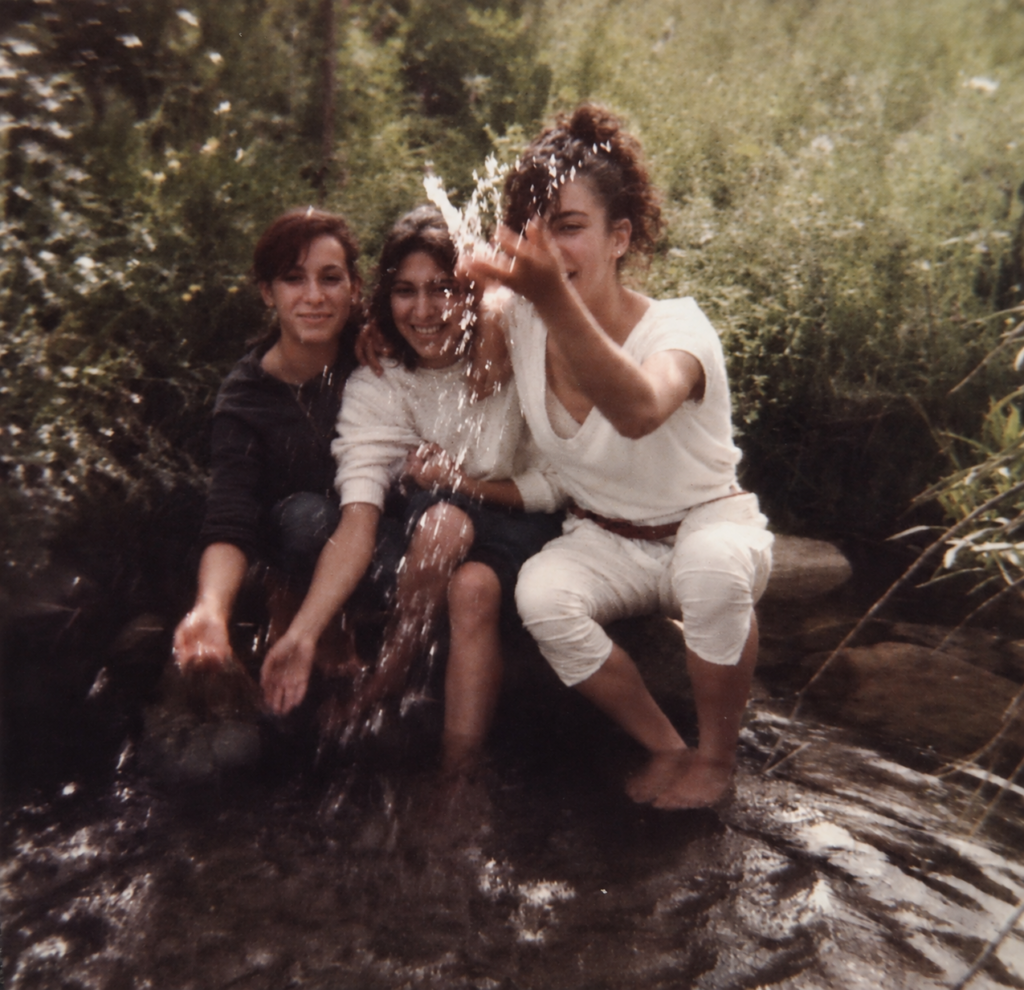
My mother tells me that girls often went there in secret because their parents did not approve. Boys, on the other hand, enjoyed more freedom: they spent entire days by the river, learned to swim, challenged each other with daring dives, and only went home when darkness began to fall.
“Una orta bi viti sa mama de unu pizzinnu a gridasa dae su casteddu, cramande su izzu ca vit preoccupata, ca su izzu non bi torraìata – Once there was a mother shouting from Su Casteddu, calling for her son because she was worried he had not come back.”
My own generation also experienced a small piece of that world. As a girl, I would sometimes go to the river with friends. We went there to swim, often in secret.
Today, most of the places where people once bathed are overgrown with weeds. The natural pools are almost always empty and silent, perhaps because the place these locations occupy in our lives has changed.
It is easy to talk about depopulation, and of course that is part of the story. But perhaps it is not only a matter of numbers. Habits have changed, as have the ways people spend their free time and their relationship with the countryside.
My grandfather spent his days by the river because he was herding goats. For him and his friends, the river was not a destination to reach. It was part of everyday life. Children and teenagers once enjoyed a freedom that seems almost unimaginable today. At twelve or thirteen years old, they spent entire days away from home, among fields, animals and water, learning early how to fend for themselves and face a certain amount of risk.
For our grandparents, the river was a place of work and community. For our fathers, it was a place of adventure. For many people today, it no longer occupies the central place it once held, because the world that naturally brought people to the river has largely disappeared. Many of the jobs, necessities and habits that once made it a gathering place have vanished.
The river, however, is still there, almost unchanged.
Perhaps it did not empty simply because there are fewer people.
Perhaps it emptied because the world that once filled it with life has disappeared.