

January 16 is approaching and, in this period, there are always strange sensations that bring the past back to the surface. Among them is the peculiar relationship we Sardinians have with fire.
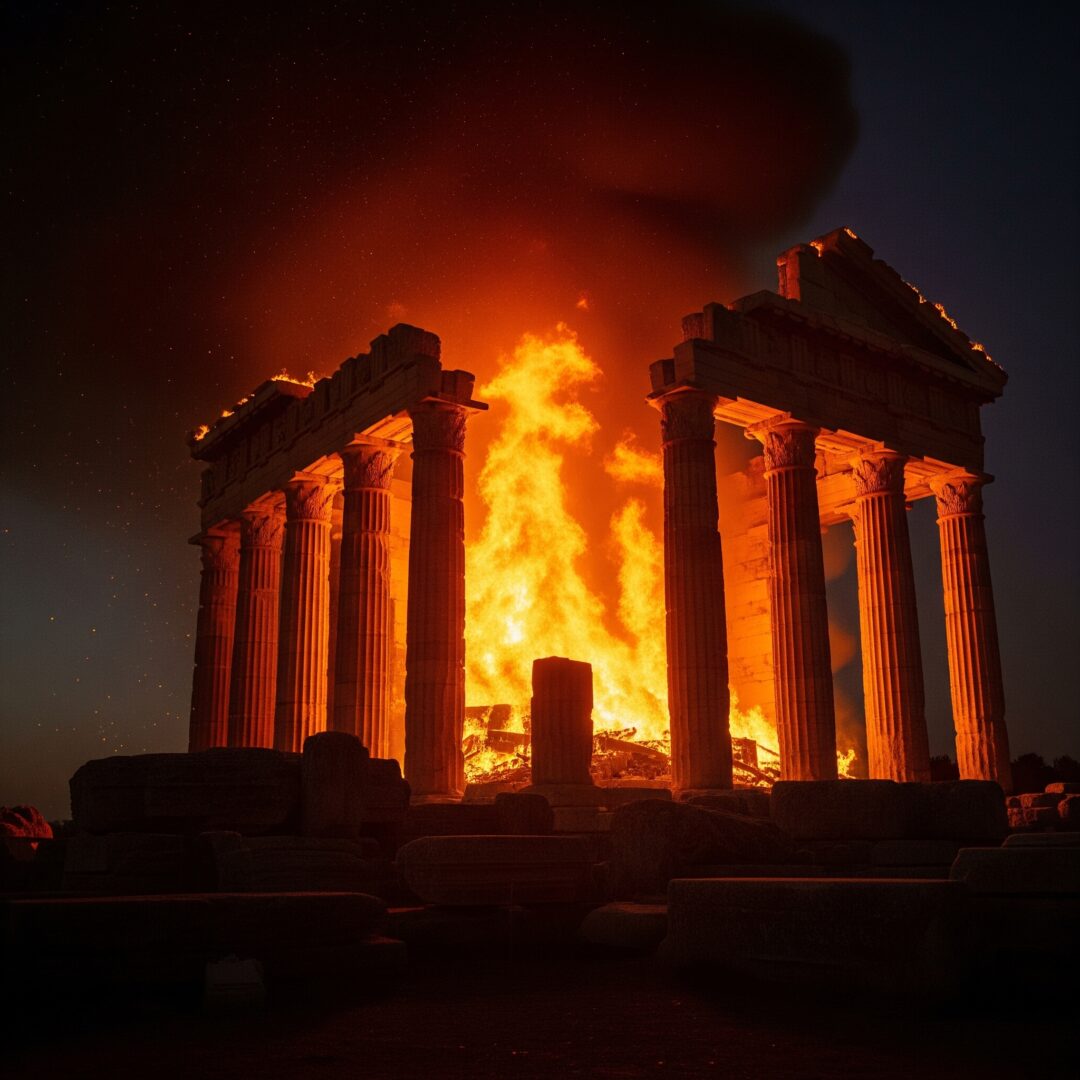
In Lodè, as in many other villages in Sardinia, a huge fire is lit on January 16. It is an ancient celebration that blends pagan elements with stories later invented by the Church, and it symbolically marks the passage from the harshest part of winter toward a new time.
Everyone gathers around the fire and watches the wood burn, next to a pole almost twenty meters high, which men try to climb in order to win. Then people eat, and without really realizing it, they wait for something to end so that something else can begin.
Fire, the pagan element par excellence, performs a very powerful symbolic act: when it touches something, that thing is never the same again. It is an element of passage, because it clearly separates a before from an after, and it is also destructive. This matters, because destruction is often followed by rebirth: like when we go through a particularly dark period and then feel as if we are being reborn, or like when a war ends, when the first signs of hope begin to reappear.
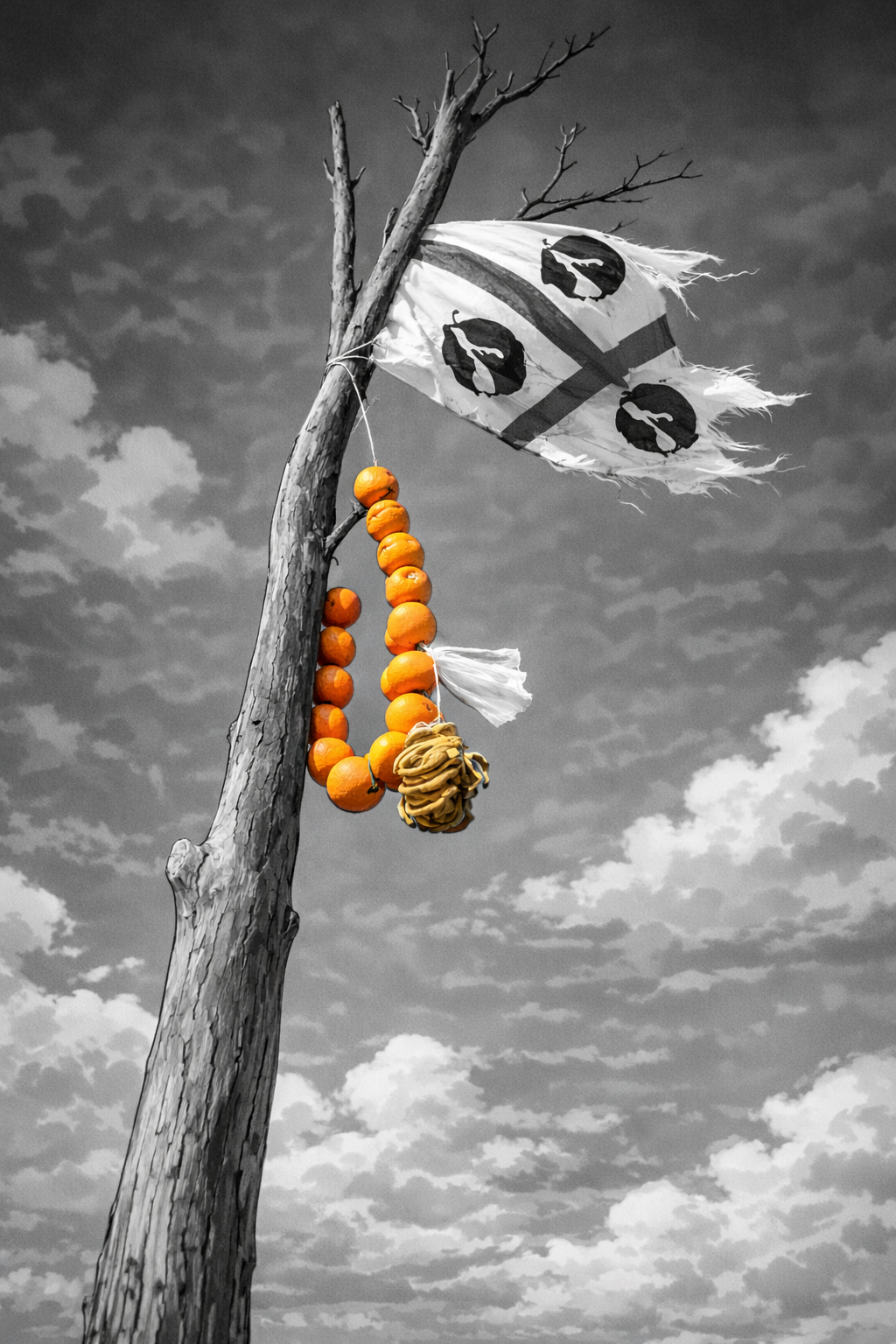
While the fire burns, a wreath of oranges can be seen hanging from the tree trunk. It is winter. January is cold, the fields are still, darkness falls early, and yet the oranges stand out, vivid, bright, fragrant. Some elders recount that, long ago, the village shepherds would wait for the fire to finish its work before taking the oranges hanging from the pole at the end of the celebration. They believed deeply in symbols, without knowing it. Then they would do something rather curious: they would take those oranges to their fields, where their flocks grazed, and hide them at the exit of the enclosure, S’aitu. Not inside, not outside, but exactly there, at the point of passage, where animals entered and left.
The animals would jump over them every day and, without knowing it, they too helped reinforce the belief that moving the sacred from the center of the village, where the celebration had taken place, to the countryside could bring good fortune. Because the animal, by leaping over the boundary, emphasizes that prosperity is born in transition, that risk always lies at the threshold, and that blessing is needed when you step out, not when you are safe.
Whether these rites truly brought good fortune, we cannot know.
What we do know is that our ancestors cultivated not only their fields, but also an unconscious hope and a trust in mystery. It may sound like a contradiction, but this often gave them a strength that, in an extremely rational world like ours, struggles to exist. Much like someone who has an unshakable faith in God: it is not important whether God exists, but that faith itself provides inner strength. Ultimately, it is a way of believing in oneself. It is a way of believing in the future.
At a historical moment like ours, when tomorrow seems to be crumbling before our eyes, it may be worth asking what happens to a society when it stops believing in the future.